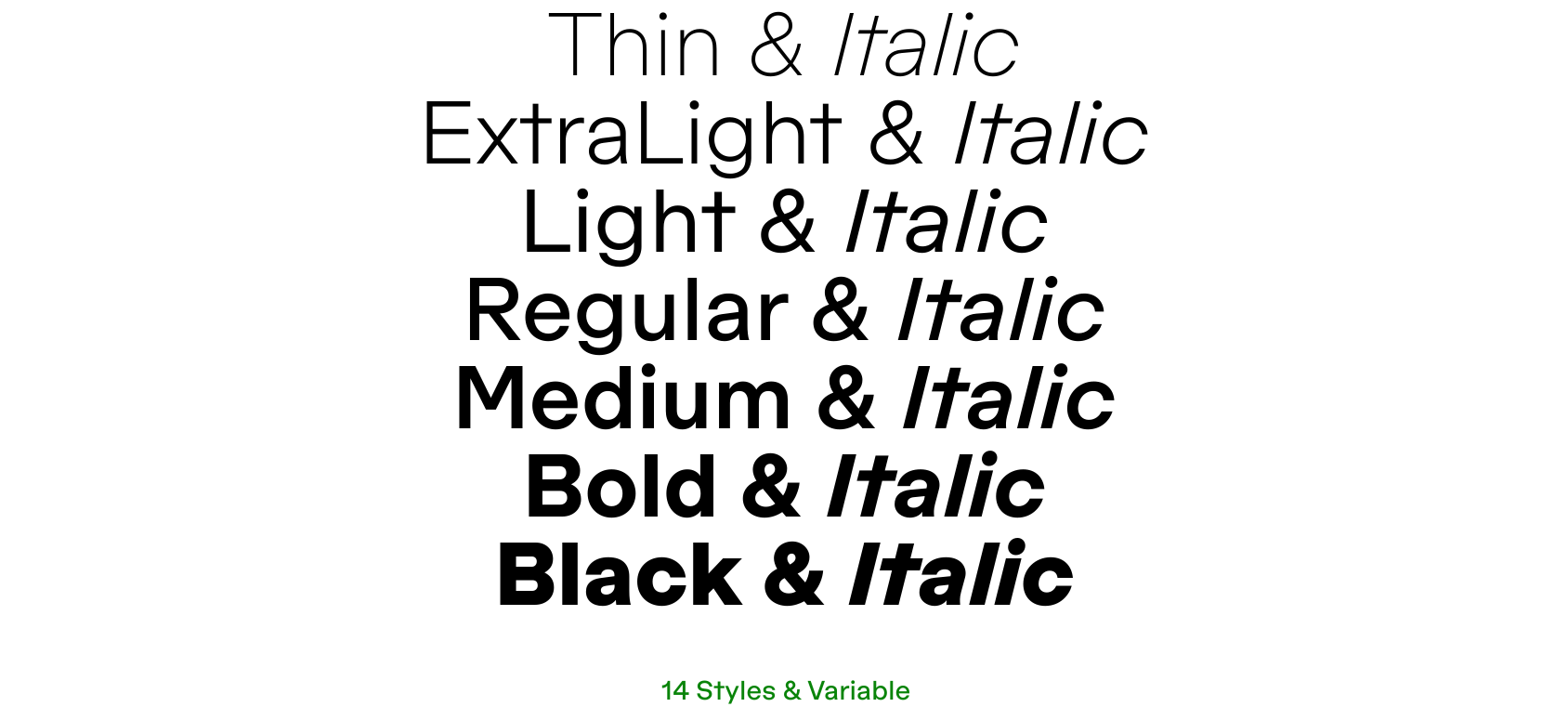
Inspired by Hans Prinzhorn’s notion of Gestaltung Plastique, Walla draws from Art Brut as a full-fledged artistic language. The typeface channels the pulsating layers Prinzhorn described, between structure, ornament, and spontaneous expression, bringing them to life in every letterform. Walla’s voice resonates directly with the work of August Walla [ˈval.a], a key figure of Art Brut whose radical expressiveness fuels the design. His marks, additions, and graphic detours ripple through the typeface via a system of alternates, giving each character a sense of unpredictability, multiplicity, and immediate energy.
Though its foundation lies in the tradition of the modern grotesque, descendants of nineteenth-century sans serifs refined by the rational codes of modernism, Walla subverts this grammar by injecting deliberate instability. Its proportions follow a functional and geometric logic to satisfy the drive for imitation, yet are disrupted by subtle shifts, as seen in the lobes of letters like “p” and “q.” This approach preserves the readability and discipline of a neo-grotesque while allowing expressive impulses to surface, a surface that pulses with vitality.
In the space between the strict discipline of neo-grotesques and the unrestrained flow of raw expression, Walla comes alive: vibrant and restless, yet always legible, capturing the spirit of Art Brut in motion.