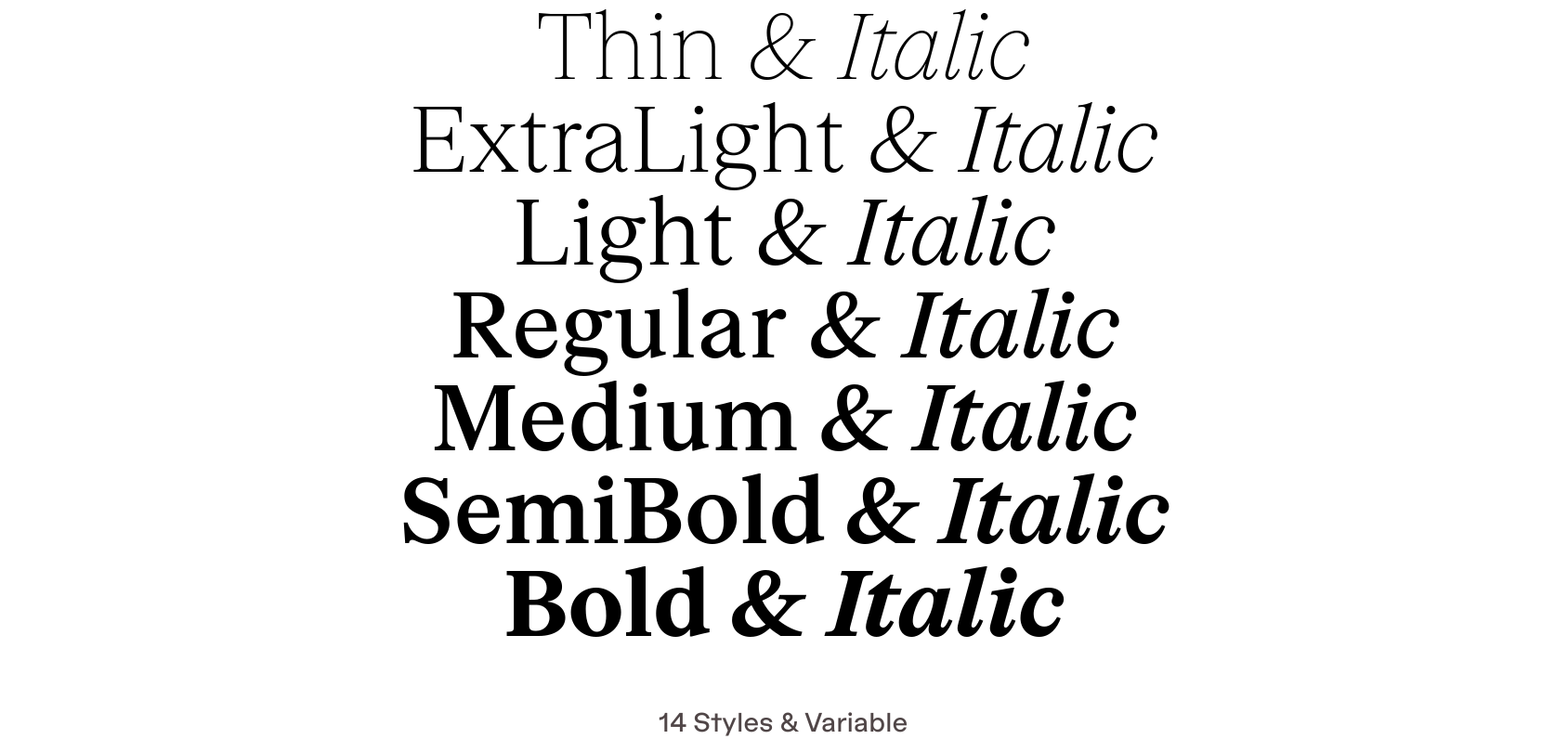
Ripley began in 2018 as a research project focused on the challenge of legibility in digital environments. This work explored how technological variables can influence on-screen readability and led to the creation of eight adaptive axes that respond to the user’s environment. The research was presented at the Swiss Design Awards in 2020.
From this investigative foundation, the design was guided by standardized proportions to ensure optimal performance with variable technology and at small sizes. Building on this groundwork, the typeface draws on the rich lineage of Times, combining references from several of its variations, including the original Roman, NR Seven, Europa, Millennium, and Titling.
From these sources, Ripley distilled the features most effective for small text: wider proportions and reinforced hairlines that preserve clarity and balance at reduced sizes. Combined with contemporary refinements, these influences shaped a design that is both precise and versatile.
In this way, Ripley asserts its own voice. While it draws on the legacy of Times, it does not seek to revive any single version. Instead, it brings together historical references from multiple variations with contemporary influences, resulting in a typeface that feels rooted in its sources while remaining distinctly its own. Its broad range of weights makes it equally at home in formal publications and more informal contexts, uniting readability, technical performance, and a distinctly modern character.