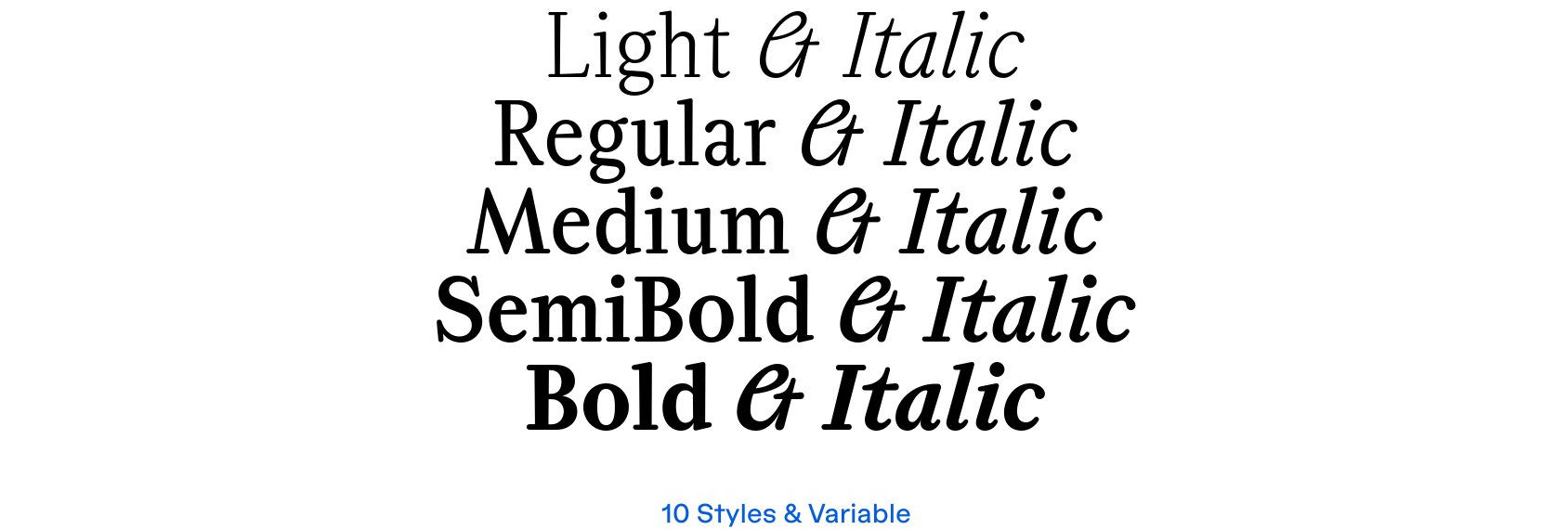
The spirit of Mozart is rooted in the typographic explorations of the interwar years, between Elizabeth Friedlander and Emil R. Weiß. This historical foundation became the starting point for a process of simplification and openness, seeking to reimagine structure while giving rise to a more fluid and graceful character.
The encounter with the strokes of Old Roman Rounded marked a decisive turning point: the choice of rounded serifs emerged almost naturally, endowing the letters with a softness that contrasts with the classical rigor of their proportions. This approach echoes early twentieth-century milestones such as Peter Behrens’s AEG monogram or Richard Gans’s El Greco Antique, where the rounded form adds a subtle tension. In this way, Mozart weaves together dynamism and softness, like a harmony suspended between discipline and grace.