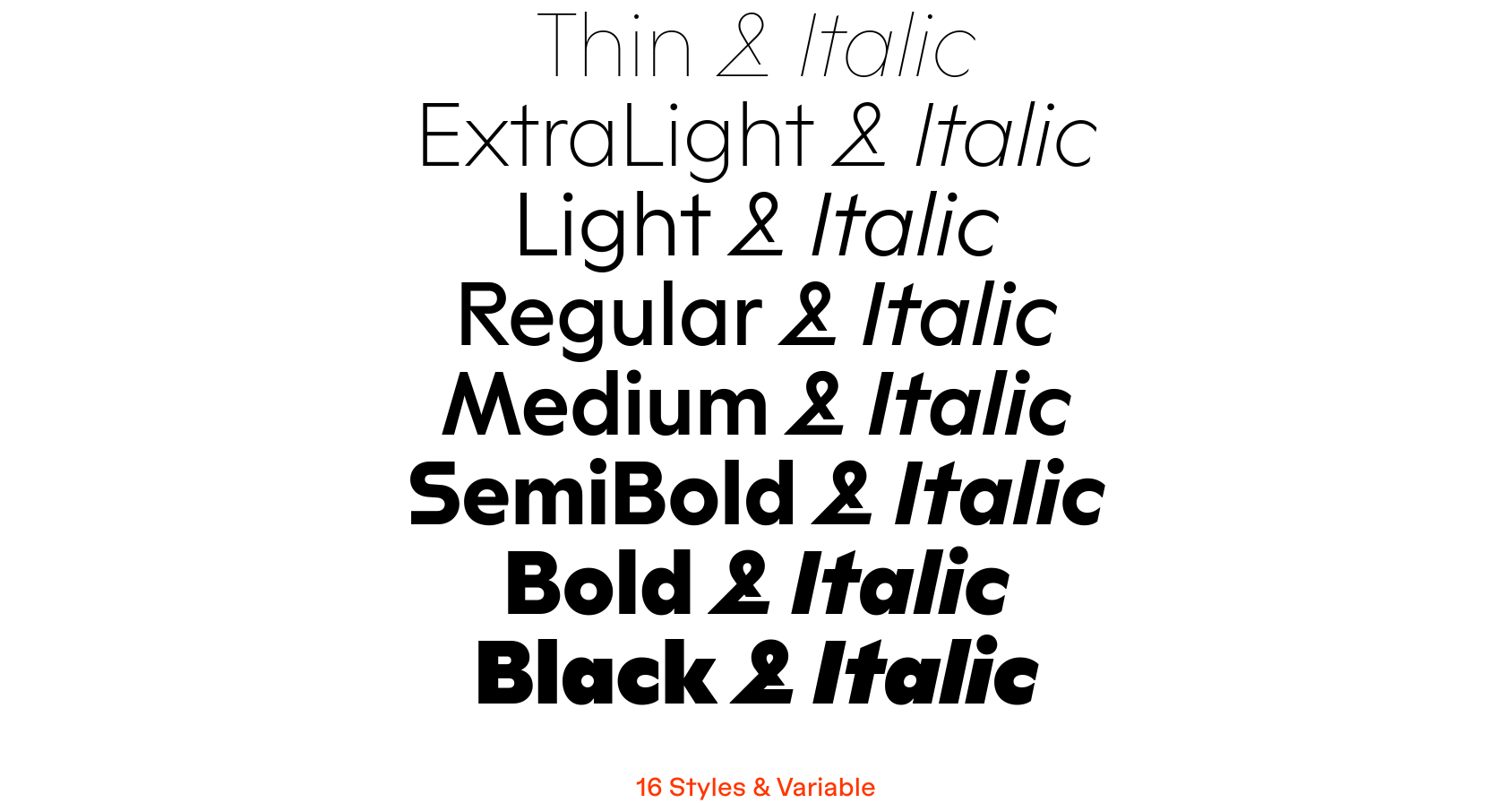
Gerrit originates from the graphic work of Nicolaas P. de Koo for the Dutch PTT (Post, Telegraph and Telephone service), where typography had to meet the demands of readability and visual consistency in public communication. This approach was reinforced and enriched by the “Monumental-Versalien” presented in Schriften, Einfassungen (1910). This geometric sans serif, whose formal clarity often resonated with the forward-looking vision of its time, brought cohesion to typographic design while extending N. P. de Koo’s graphic intentions.
It belongs to the typographic movement of the 1920s and 1930s, shaped by the graphic experiments of figures such as Paul Schuitema, and following in the footsteps of Wilhelm Deffke’s pioneering work. At the crossroads of constructivism, geometry, and functional rationality, Gerrit positions itself as a typeface that is rigorous in form, yet open to playfulness and stylistic flexibility.